
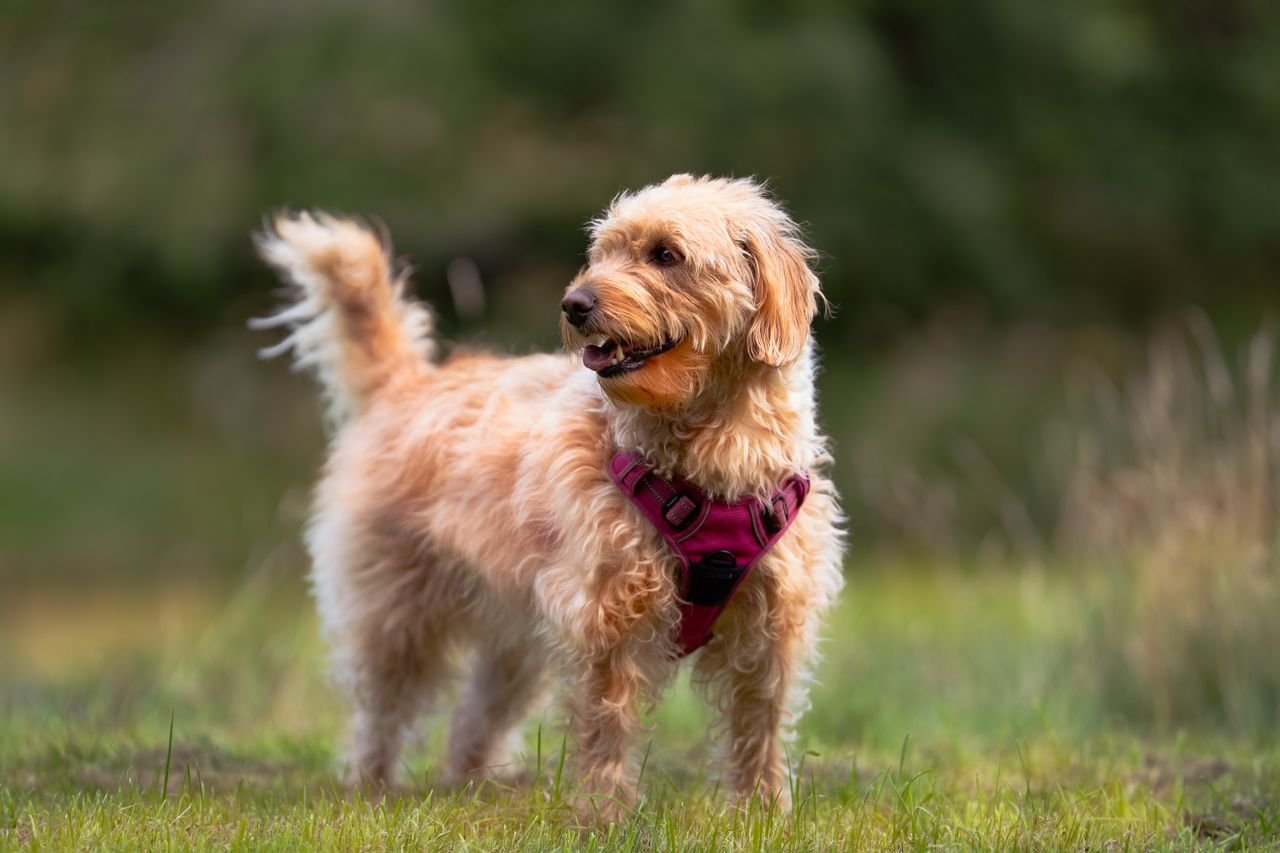
Life in a Doodle's Eyes
Your world.
Seen through theirs.
The walk isn't just a walk. The front door isn't just a door. Your scent, your voice, your routines and the smallest changes in the day can mean far more to your Doodle than you realize.
Imagine the day from four paws down
Same house.
Different experience.
Humans move through life with schedules, plans, conversations and screens.
Your Doodle experiences much of that same world through scent, movement, sound, body language, repetition and the people they trust.
A five-minute sniff outside may contain more information than we can imagine. A change in your voice may matter before your words do.
Understanding the world from your dog's perspective can make training, care and everyday life feel very different.
The Doodle version of your world
Everything carries
information.
Where we may see one ordinary sidewalk, a dog may experience hundreds of smells, movements, sounds and recent visitors.
“Who was here?”
Smells can reveal who passed through, where another dog stopped and what changed since yesterday.
“What was that?”
Doors, engines, voices and distant movement may be noticed long before you react.
“I know what comes next.”
Repeated patterns can help the day feel understandable and predictable.
“I'm watching you.”
Your posture, movement and tone can become important clues about what is about to happen.
Their sensory world
The world doesn't
arrive the same way.
Dogs and humans notice different things, and those differences help explain a lot of everyday behavior.
The information network
Sniffing isn't wasted time. It can be exploration, information gathering and mental enrichment.
Things you barely notice
A distant truck, footsteps outside or a hallway noise may grab your Doodle's attention.
Motion changes everything
Joggers, bikes, children running and other animals may become highly noticeable.
Contact can feel different
Petting, brushing, hugs and grooming are not automatically comfortable just because we mean well.
Context matters
Shapes, movement and environments can look very different depending on lighting and distance.
Repetition becomes a clue
Shoes on, keys picked up, leash moved— the sequence can predict what happens next.
A Doodle's ordinary day
Small moments
become landmarks.
Your dog may organize the day around events that seem tiny to you.
Movement starts. Breakfast may be coming. The house has changed from night mode to day mode.
The same street may be completely different from yesterday through scent.
Quiet periods can mean rest, waiting or watching for familiar sounds.
Dinner smells, familiar movement and social time may become predictable signals.
Lights dim, movement slows and the day's routine closes in familiar ways.

The human at the center of the picture
Your Doodle
watches you too.
We spend a lot of time watching our dogs. They are watching us right back.
Your tone, posture, pace and reactions can become part of how your Doodle interprets a situation.
That does not mean you need to act perfectly. It means communication is happening even when nobody says a word.
Through a Doodle's eyes
You're more than
the person with the treats.
Familiar people can become sources of safety, information, activity, comfort and routine.
“What should I do?”
Clear cues and predictable responses can help your dog understand what works.
“This feels familiar.”
Your presence may become part of what makes routines and environments feel safe.
“You make things happen.”
Walks, games, toys and exploration often begin with you.
“I want to be near you.”
Many Doodles strongly value social contact with their people.
“I know your patterns.”
Dogs often learn the sequences that predict meals, walks, departures and bedtime.
“I believe what you show me.”
Repeated safe experiences can build confidence in both people and situations.
They're speaking all day
Learn to hear
without words.
Dogs communicate through movement, posture, distance and changes in behavior.
Loose & easy
Relaxed movement, soft expression and the ability to disengage often suggest comfort.
Slow down
Looking away, lip licking, yawning or hesitation can signal uncertainty.
Listen earlier
Freezing, hiding, retreating or becoming rigid can mean the dog needs more distance.
When the world becomes too much
More stimulation
isn't always better.
A busy day can fill the brain long before the body looks tired.
New environments, visitors, play, training and exciting outings can all add up.
They can also appear when a dog is overtired or overloaded.
More exercise isn't always the solution to an already exhausted dog.
Quiet time helps the nervous system settle after busy experiences.
A dog who suddenly cannot respond normally may need a break.
If your Doodle could make a list
“Here's what helps
my world make sense.”
Predictable basics
Meals, bathroom breaks and familiar patterns can create structure.
Appropriate exercise
Movement should fit age, health, energy and individual needs.
Time to investigate
Walks do not always need to be fast. Sniffing can be valuable enrichment.
Mental work
Training, problem solving and enrichment can give the brain useful jobs.
Real downtime
Dogs need opportunities to sleep and relax without constant interruption.
Time with their people
Many Doodles value social contact, play and quiet companionship.
If Doodles could narrate the day
We imagine it
might sound like this.
Not science. Just highly believable Doodle commentary.
“You opened your eyes. Breakfast negotiations may now begin.”
“This exact bush smells completely different today. Please allow additional research.”
“You said you had a meeting. I have scheduled myself directly beneath your chair.”
“I heard the word walk three sentences ago. Nothing else matters now.”
“Technically that's your dinner. Emotionally, I believe we share it.”
“There is an entire bed available, but I will sleep on your feet.”
Trust is built in ordinary moments
Your Doodle learns
what to expect from you.
Trust isn't one giant event. It's hundreds of small experiences repeated over time.
Gentle, clear interactions help your dog know what is happening.
Listening when your dog needs space makes communication meaningful.
Rewarding useful behavior makes the environment easier to understand.
Helping a worried dog instead of forcing them through can protect confidence.
Small routines often matter more than dramatic gestures.
The little things
A Doodle's idea
of a very good day.
One interesting bush
Allowed to investigate without being rushed.
The favorite game
The one that appears every single day and somehow never gets old.
A quiet nap
Somewhere comfortable, familiar and undisturbed.
Being together
Sometimes nothing special needs to happen at all.
Life through their eyes
Understanding more
changes how we respond.
Why does my Doodle sniff everything on walks?
Scent gives dogs enormous amounts of information. Sniffing can also provide useful mental enrichment, so not every walk needs to focus only on distance or speed.
Why does my Doodle stare at me?
Dogs may watch people for information, anticipation, social connection or because they have learned that looking at you makes something happen.
Why does my Doodle follow me around the house?
Many Doodles enjoy staying near their people. If following becomes severe distress whenever the dog is separated, more independence training or professional guidance may be useful.
Does my Doodle understand my emotions?
Dogs can notice changes in voice, posture, movement and routine. That does not mean they interpret human emotions exactly the way another person would.
Why does my Doodle act wild after a busy day?
Excitement and overtiredness can both contribute to frantic behavior. Some dogs need help transitioning from stimulation into quiet recovery.
Why does routine matter so much?
Repeated patterns help dogs predict what is likely to happen next, which can make everyday life easier to understand.
Does my Doodle need constant entertainment?
No. Enrichment and activity matter, but dogs also need genuine opportunities to rest and do nothing.
What's the best way to understand my individual Doodle?
Observe patterns: what creates excitement, what causes hesitation, how your dog communicates, what helps them recover and which activities they repeatedly choose.
Same life. Two perspectives.
See the dog.
Not just the behavior.
When we consider what our Doodles may be noticing, feeling and trying to communicate, everyday moments start to look different. The goal isn't to humanize every thought— it's to understand the dog standing right in front of us a little better.