
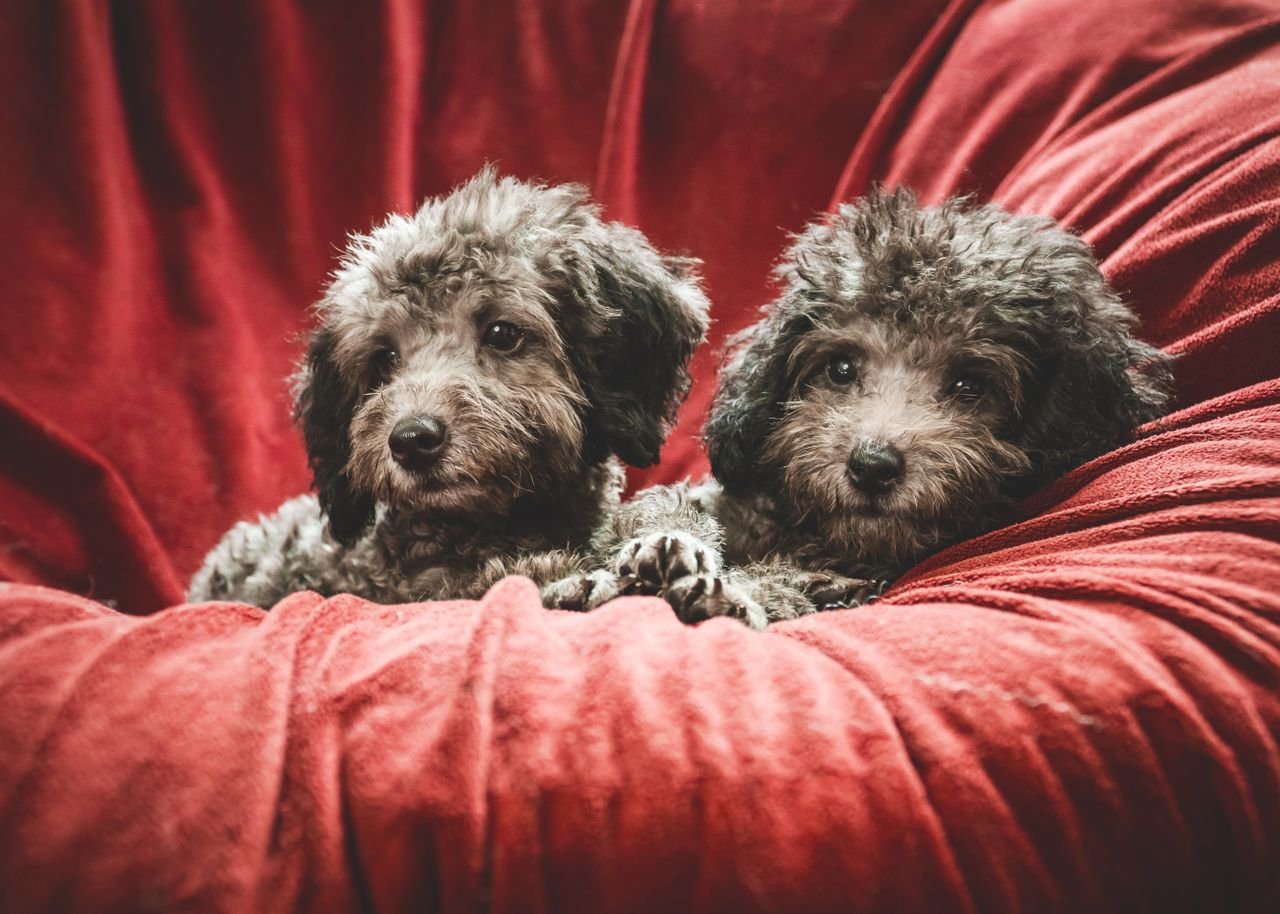
Welcome to All About The Doodle
Everything Doodle.
All in one place.
Goldendoodles. Labradoodles. Bernedoodles. Cavapoos. Aussiedoodles and beyond. Discover what makes Doodles unique, what life with one is really like, and what every future or current Doodle family should know.
So, what exactly is a Doodle?
It's more than
curly hair.
“Doodle” is the popular name used for dogs created by crossing a Poodle with another breed. That can mean a Golden Retriever and Poodle, Labrador and Poodle, Bernese Mountain Dog and Poodle—or dozens of other combinations.
Because Doodles are crosses rather than one standardized breed, there isn't one guaranteed Doodle appearance, temperament, size or coat. Every dog brings together genetics from both sides of the family.
That's part of what makes learning about them so interesting: knowing the parent breeds helps you understand the possibilities, but the individual dog always matters most.
Doodle 101
Start with the
family tree.
The Poodle contributes part of the picture. The other parent breed contributes the rest. Genetics decides how those pieces come together.
Intelligence
Poodles are athletic, highly trainable dogs with a long history as working water retrievers.
Another breed
Retriever, herding, spaniel, companion and working breeds can contribute very different traits to a Doodle.
No exact recipe
Puppies from the same litter can vary in coat, size, energy, shedding and personality.
Meet the dog
Breed ancestry gives clues. The individual dog's behavior, health and needs tell you much more.
Welcome to the Doodle family
One idea.
Many combinations.
The other parent breed can influence size, activity, temperament, coat and everyday care.
Goldendoodle
Golden Retriever + Poodle. Often sought by families looking for an active, social companion.
Labradoodle
Labrador Retriever + Poodle. An athletic combination with strong working and companion roots.
Bernedoodle
Bernese Mountain Dog + Poodle. Often larger when Standard Poodles are involved.
Aussiedoodle
Australian Shepherd + Poodle. Often associated with highly active, mentally engaged households.
Cavapoo
Cavalier King Charles Spaniel + Poodle. Usually a smaller Doodle combination.
Sheepadoodle
Old English Sheepdog + Poodle. Fluffy coats can come with substantial grooming responsibilities.
Cockapoo
Cocker Spaniel + Poodle. One of the longer-established Poodle-cross companion dogs.
Maltipoo
Maltese + Poodle. A smaller companion-oriented Doodle combination.
And many more
Whoodles, Yorkipoos, Schnoodles, Irish Doodles, Newfypoos and many other Poodle crosses exist.
Explore all Doodle types →Decode the letters
F1? F1B?
F2?
These labels describe ancestry—not guarantees.
They can tell you how the parent dogs were related, but they cannot promise a particular coat, shedding level, temperament or allergy compatibility.
Commonly one purebred Poodle parent and one purebred parent of the other breed.
Commonly an F1 Doodle bred back to a Poodle.
Commonly two F1 Doodles bred together.
Later-generation ancestry involving Doodles rather than only first-generation parent combinations.
An F1B label may tell you something about ancestry, but genetics can still produce variation between siblings. Always evaluate the actual parents, health testing, coat history and individual puppy.
The famous Doodle look
Curly. Wavy.
Straight. Everything between.
Doodle appearance can be wonderfully varied—and that variability is important to understand before choosing one.
Coat
Coat texture may range from straighter and more shedding to loose waves or dense curls.
- Straight
- Wavy / fleece-like
- Curly
- Different density levels
Size
Doodle size depends heavily on both parent breeds and whether Toy, Miniature or Standard Poodle ancestry is involved.
- Small companion sizes
- Medium Doodles
- Standard sizes
- Very large combinations
Color
The range can be enormous depending on the breeds involved and the genetics carried by the parents.
- Cream & apricot
- Red & brown
- Black & gray
- Parti, phantom & multicolor patterns
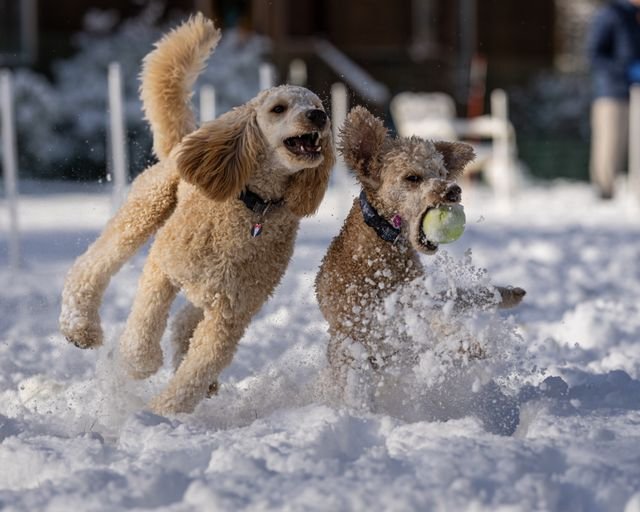
Personality matters more than Instagram
Meet the dog.
Not just the label.
A Doodle can inherit behavior tendencies from either side of the family, and environment, training and experience shape the dog too.
A Goldendoodle isn't automatically calm. An Aussiedoodle isn't guaranteed to be endlessly energetic. A Bernedoodle isn't guaranteed to be laid-back.
Learn about both parent breeds, then pay attention to the actual individual dog's confidence, sociability, activity needs and ability to settle.
What's life with one like?
Smart dogs need
more than a backyard.
Many Doodles come from intelligent, active parent breeds. Build a life that gives the dog appropriate outlets for movement, learning, companionship and rest.
Train the brain.
Short reward-based sessions can channel intelligence into useful everyday skills.
Stay active.
Activity needs vary, but walks, sniffing and appropriate play are important parts of everyday life.
Be together.
Many Doodles are bred from highly social companion or working breeds and enjoy meaningful interaction.
Teach an off switch.
A balanced dog also needs practice settling and relaxing instead of being entertained constantly.
The real Doodle ownership guide
Cute is the beginning.
Care is the commitment.
Here's what living with a Doodle actually includes.
That coat takes work.
Many wavy and curly Doodle coats require thorough brushing, combing and regular professional grooming.
Explore Doodle Grooming →Move the body. Work the brain.
Walks, sniffing, training, play and enrichment help build a balanced daily routine.
Exercise & Activities →Feed the individual.
Size, age, activity and body condition matter more than feeding according to a Doodle label alone.
Food & Nutrition →Start with communication.
Reward-based training helps turn enthusiasm and intelligence into skills that work in everyday life.
Training a Doodle →Plan beyond the puppy price.
Food, grooming, veterinary care, training, supplies, insurance and unexpected expenses all belong in the budget.
Cost of Owning a Doodle →Adapt the routine.
Heat, cold, pollen, snow and weather conditions can change grooming and activity needs.
Seasonal Care →Doodle myths worth clearing up
Cute claims aren't
always guarantees.
“All Doodles are hypoallergenic.”
No dog is completely hypoallergenic. Doodles may inherit different coat and shedding patterns, and allergies can involve dander, saliva and other proteins.
“Doodles don't shed.”
Some Doodles shed very little while others shed considerably more. Coat genetics are variable.
“Curly means easy grooming.”
Dense curls may actually require extremely consistent brushing and professional coat care.
“Mixed automatically means healthier.”
Mixed ancestry doesn't eliminate inherited health concerns. Health testing of breeding dogs still matters.
Health begins before the puppy comes home
Genetics still
matter.
A crossbred dog can inherit health risks carried by either parent breed.
Responsible breeding involves more than combining two popular dogs. Health screening should be appropriate for both breeds represented in the pairing.
Understand the health history and breed backgrounds on both sides.
“Vet checked” is not the same as breed-appropriate screening of breeding dogs.
Parent size provides useful information, but exact adult size may still vary.
Ask how both parents behave around people, dogs, handling and everyday environments.
Bring records to your veterinarian and build an individualized preventive-care plan.
Before you fall in love with the photo
Ask whether the life
fits the dog.
The right question isn't only “Do I want a Doodle?” It's “Can I meet this dog's needs for years?”
Do you have time?
Training, grooming, exercise and companionship become part of the weekly routine.
Can you maintain the coat?
Professional grooming plus home maintenance can be a significant time and financial commitment.
Does the activity level fit?
Consider both parent breeds and the actual individual dog.
Can you afford the care?
Food, grooming, training, supplies, routine veterinary care and emergencies add up.
Is everyone ready?
Children, other pets, work schedules and housing all belong in the decision.
Think in years.
The adorable puppy stage is short. The commitment to the adult and senior dog lasts much longer.
This is only the beginning
Explore the whole
Doodle life.
From choosing your dog to living together every day, we've built guides for the questions Doodle families actually ask.
Types of Doodles
Explore Poodle crosses from Goldendoodles to lesser-known combinations.
LEARNHistory of the Doodle
Discover how Poodle crosses became part of modern dog culture.
LIVELife With Doodles 101
Everyday routines, home life, care and what ownership actually looks like.
GROOMGrooming a Doodle
Brushing, coats, mat prevention and professional grooming.
FEEDFood & Nutrition
Feeding routines, portions, life stages and healthy body condition.
MOVEExercise & Activities
Physical exercise, brain games, sniffing and enrichment.
ADAPTSeasonal Care
Summer heat, winter paws, spring pollen and year-round comfort.
PLANCost of Owning a Doodle
Understand first-year, monthly and long-term ownership expenses.
UNDERSTANDBehavior Challenges
Work through common challenges with practical guidance.
Doodle questions everyone asks
The big questions.
Clear answers.
Is a Doodle an official dog breed?
“Doodle” is generally used as an umbrella term for Poodle crosses rather than one single standardized breed. Traits can vary significantly between combinations and individual dogs.
Are all Doodles hypoallergenic?
No. No dog is completely hypoallergenic. Doodles may inherit lower-shedding coats, higher-shedding coats or something in between.
Do all Doodles have curly coats?
No. Depending on genetics, a Doodle may have a straighter, wavy, fleece-like or tightly curled coat.
Are Doodles good family dogs?
Many Doodles live happily with families, but a label cannot guarantee compatibility. Consider the individual dog's temperament, size, energy, history and comfort around children and other animals.
How big will my Doodle get?
Adult size depends on the breeds involved, the size of the parent dogs and genetics. Estimates may be useful, but exact adult height and weight cannot always be guaranteed.
How much grooming do Doodles need?
It varies by coat. Wavy and curly coats may require frequent thorough brushing and regular professional grooming to prevent matting. Straighter coats may shed more while requiring a different maintenance routine.
Are Doodles easy to train?
Many come from highly intelligent parent breeds, but intelligence does not automatically produce a trained dog. Consistent, reward-based teaching and practice are still important.
Are mixed-breed dogs automatically healthier?
No. Crossbreeding does not automatically eliminate inherited disease. Doodles can inherit conditions associated with either parent line.
Should I adopt or use a breeder?
Both routes can lead to wonderful dogs. With adoption, learn as much as possible about the individual dog's history and needs. When buying from a breeder, look for transparency, breed-appropriate health testing and thoughtful puppy raising.
Welcome to the Doodle life
Learn the dog.
Love the individual.
There isn't one perfect definition of a Doodle—and that's exactly why understanding the whole dog matters. Learn the parent breeds. Understand the coat. Plan for grooming. Make room for training, exercise and veterinary care. Then enjoy the personality standing right in front of you.